Mobile VIP toilets are designed to provide a more comfortable sanitation solution where permanent bathroom facilities are unavailable or insufficient. Although different models can use different systems, buyers should understand the basic areas that need to be confirmed before purchasing: transport, water, waste, power, setup and servicing.
The mobile structure
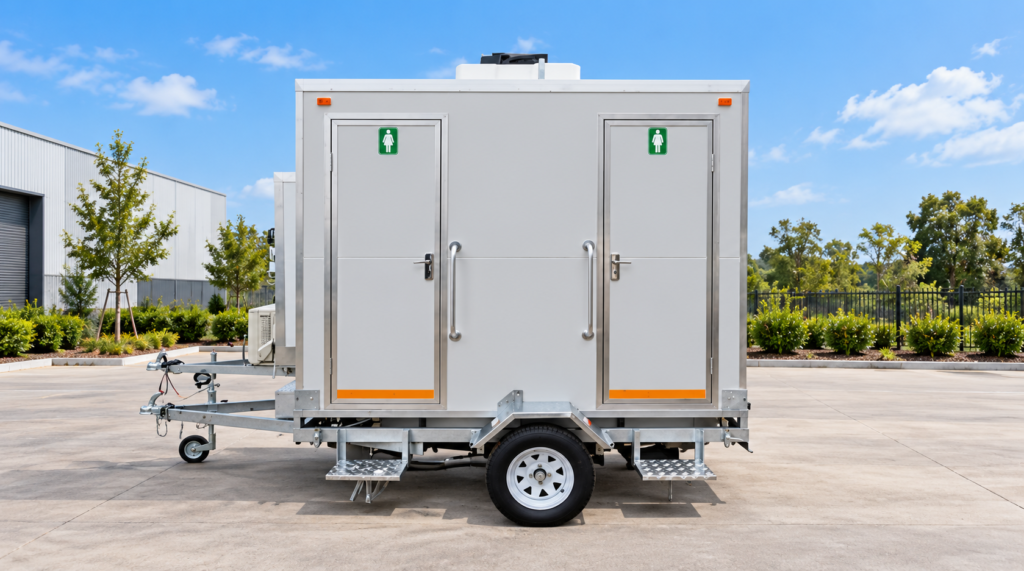
The toilet facilities are contained in a movable unit rather than built permanently on site. Depending on the model, the transport arrangement may form part of the unit or require separate handling. Always confirm the exact transport method and dimensions of the model you are buying.
Fresh-water supply
Some configurations may use onboard water storage while others can require a connection or different supply arrangement. The quotation and specification should state how fresh water reaches basins and flushing systems, what preparation is required before use and how the system is drained or protected when transported.
Waste management
Waste arrangements differ between models. Buyers should confirm the tank or waste system, servicing process and approved disposal requirements. This is especially important for businesses that plan to move units between events or construction sites.
Electrical requirements
Premium units may include lighting or other electrical equipment. Confirm whether the model requires an external power connection, what voltage is required and which electrical components are included. Do not assume every VIP unit has the same electrical setup.
Setup at the destination
The installation area should be reasonably level, accessible and suitable for the unit. Check gate widths, turning areas, overhead restrictions and room for doors, steps or ramps. The delivery vehicle must also be able to reach the setup point safely.
Different models serve different needs
Compare the Presidential VIP Toilet, Large VIP Toilet, Medium VIP Toilet, Small VIP Toilet and Single VIP Toilet before choosing a configuration.
Five operating questions for the supplier
Mobile VIP toilet systems differ between models. A self-contained unit may store water and waste on board, while another installation may rely on site connections. Do not assume every model has the same tank, pump, electrical or plumbing specification.
- Where does the clean water come from and how is the supply monitored?
- Where does used water go, and who empties or services the waste system?
- Is external power required for lights, pumps or other fittings?
- What are the setup, stabilisation and towing requirements?
- Which cleaning products and maintenance tasks are recommended for the supplied finishes?
Request operating instructions and a handover demonstration for the exact unit, especially when the toilet will be used across multiple events or sites. For a purchasing overview, read our VIP toilet size and space guide or browse models currently offered for sale.
Servicing keeps the unit usable
A mobile toilet is a working sanitation system and needs cleaning, inspection and maintenance between uses. Businesses should create a servicing checklist covering water, waste, plumbing, lights, fittings, locks, seals and external condition.
For model-specific information, browse the toilet range for sale and request the current specification with your quotation.